
The machinery of a nation is often fueled by the private ghosts of its architects, shifting from the Macro of national policy to the Micro of a man’s inner landscape. Stephen Miller stands at the center of this storm, where his lineage from the Shtetls (small Jewish towns in Eastern Europe) of Belarus informs a worldview that many see as a crusade against the very Asylum (the protection granted by a nation to someone who has left their native country as a political refugee) that saved his family from the Holocaust.
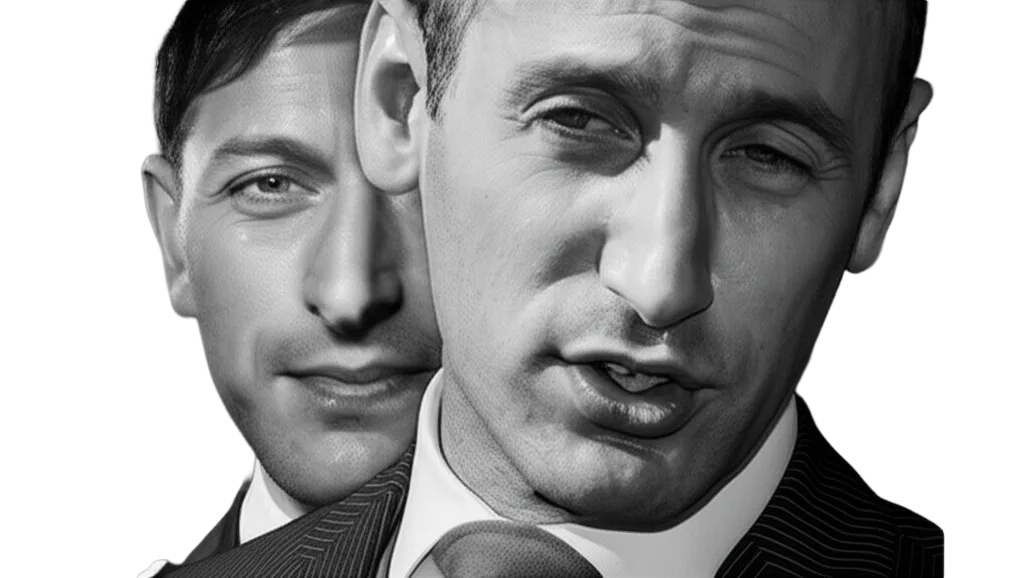
He drafts the executive orders and he directs the enforcement agents and he reshapes the federal judiciary and he identifies the vulnerabilities in the administrative state and he relentlessly pursues a vision that critics argue is the systematic dismantling of the democratic fabric itself. This pursuit is rooted in the Universal Truth that The Past Is The Fuel For The Future, a belief that history is not a lesson in empathy but a toolkit for survival. His own family has labeled him a hypocrite, noting that the Isolationism (a policy of remaining apart from the affairs or interests of other groups) he champions would have barred his own ancestors from safety in 1903.
By using the administrative state to “flood the zone,” Miller seeks to prioritize Executive Fiat (an arbitrary order or decree) over traditional democratic deliberation. This strategy targets the Administrative State (the professional bureaucratic apparatus of the government), identifying specific levers to bypass Congressional intent. He understands that while laws are written in ink, their execution is written in the daily actions of officials now directed by his mandates, moving the executive branch toward a model of centralized, unilateral control.
This restructuring is not merely about borders; it is about the definition of American identity itself. Miller’s work reflects Nativism (the policy of protecting the interests of native-born or established inhabitants against those of immigrants), a philosophy that views new arrivals as existential threats. He frames every policy as a choice between national survival and collapse, a binary that leaves no room for the Pluralism (a system in which two or more states, groups, or principles coexist) typically found in a functioning democracy.
By challenging the Non-Refoulement (the practice of not forcing refugees or asylum seekers to return to a country in which they are liable to be subjected to persecution) principle, Miller is rewriting the moral code that has governed international relations since World War II. This is a deliberate attempt to decouple American interests from global humanitarian standards. This move aligns with his broader goal of dismantling the post-war liberal order, proving his belief that Power Is The Only Protection.
The resistance to his agenda remains fierce, as civil rights organizations work to block his initiatives in court. These battles are fought over the Rule of Law (the restriction of the arbitrary exercise of power by subordinating it to well-defined and established laws), the primary barrier against unchecked authority. Every court injunction serves as a reminder that democracy possesses its own defenses, even when the pressure to dismantle them is constant and calculated.
However, Miller’s influence is designed to be permanent through Institutional Capture (the process by which regulatory agencies come to be dominated by the interests they were charged with regulating). By appointing ideologically aligned individuals throughout the government, he ensures his vision remains the default setting for the bureaucracy. This makes it increasingly difficult for future administrations to restore the previous status quo, anchoring his “fortress America” ideology within the gears of the state itself.
The tragedy of power is that the tools used to build a fortress often become the instruments of its demolition. When a leader uses the weight of the past to crush the possibilities of the future, the foundation begins to crack. We find ourselves in the Gutter—the narrow, dark space between the promise of a “huddled masses” democracy and the cold reality of a nation closing its doors.