
The red clay of the Appalachian slope does not remember the names of the men who clawed at its belly, but it remembers the weight of their hunger; it is a soil that has swallowed the black dust of the mines and the white bones of the dispossessed, yet now it is asked to host a new kind of ghost, a foreign specter born of the veldt and the kopje.
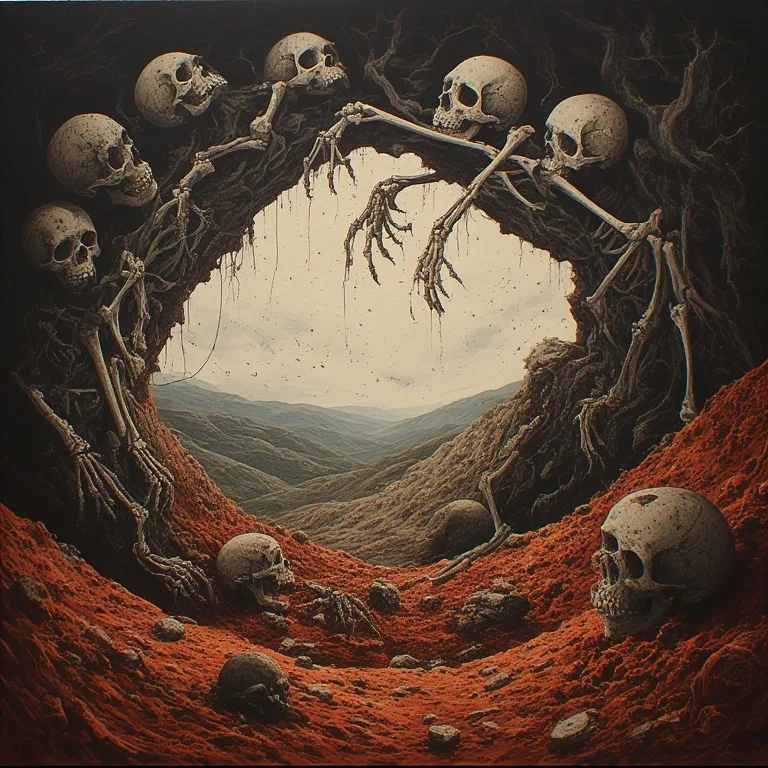
From the marble colonnades of a distant, shimmering District, where men in tailored suits play at the God-game of demographics, the decree has descended like a hawk upon a field mouse. At the high level of the Executive, the world is a map to be shaded and unshaded, a series of quotas and erasures; but in the bent-back hollows of a West Virginia county, this macro-will becomes the micro-shiver of a mother staring at an empty cupboard. The federal hand, having given for a generation, now retracts, pulling the thin blanket of the CCDF and the SNAP from the shivering limbs of the mountain poor.
And the town square is a theater of the absurd and the desperate and the coal-stained and the newly arrived and the silent and the loud. The local clinic, once the pulsing heart of the county’s fragile health, now flickers like a dying candle as the $1 billion Medicaid shortfall begins to dim the lights. Into this landscape of subtraction comes a sudden, jarring addition: the Afrikaner, the man of the sun-scorched earth, brought across the salt water by the whim of a Silicon King and a Golden President.
In the shadow of the Alleghenies, we are reminded of the Inexorable Weight of the Soil. It is a Title Case reality that The Earth Claims Every Stranger as Its Own. Whether a man speaks the liquid tongue of the Transvaal or the hard, clipped vowels of the coal camp, he is subject to the Embedded Definition of Poverty—that slow, grinding erosion of the soul that occurs when the fuel for one’s life is controlled by a hand that has never known a callus. Standing amidst this shifting ground are the sentinels of the state, Senator Shelley Moore Capito and the newly seated Senator Jim Justice, both watching as the arithmetic of their homeland is rewritten.
The administration speaks of these farmers as the new “fuel” for a stagnant land, a revitalizing force to be injected into the veins of a dying county. They call it Mission South Africa, a crusade of resettlement that ignores the 7,500-person cap placed upon the wretched of other earths. Elon Musk views the Afrikaner not as a man but as a technology—a specialized tool for the cultivation of a new American order.
While the federal government allocates millions for the “rapid pathway” of the Afrikaner, the state of West Virginia—guided by the hands of Capito and Justice—prepares to navigate a $250 million strip from its own general fund, ensuring that the welcome mat for the newcomer is laid over a floor that is rotting through.
The sun dips behind the ridge, casting a long, dark shadow over the silos and the tipples alike, and in that gloom, the distinction between the man who was born here and the man who was imported vanishes; they are both merely pawns in a game of checkers played by giants who have forgotten that every piece moved is a life interrupted.
Pingback: tadalafil for sale
Pingback: buy antibiotics online for tooth infection
Pingback: vibramycin for bronchitis
Pingback: diflucan pain medication
Pingback: lamotrigine