
Phyllis Hyman was the undisputed Queen of the Night, a skyscraper-tall presence who didn’t just walk into a room—she reshaped the city’s skyline around her. She was the high-fashion pulse of the metropolitan center, starting with the shimmering, champagne-soaked allure of a Studio 54 dance floor and then pivoting, with a sharp and soulful turn, into the dim, neon-flicker of a rainy street corner where the sirens never stop screaming.
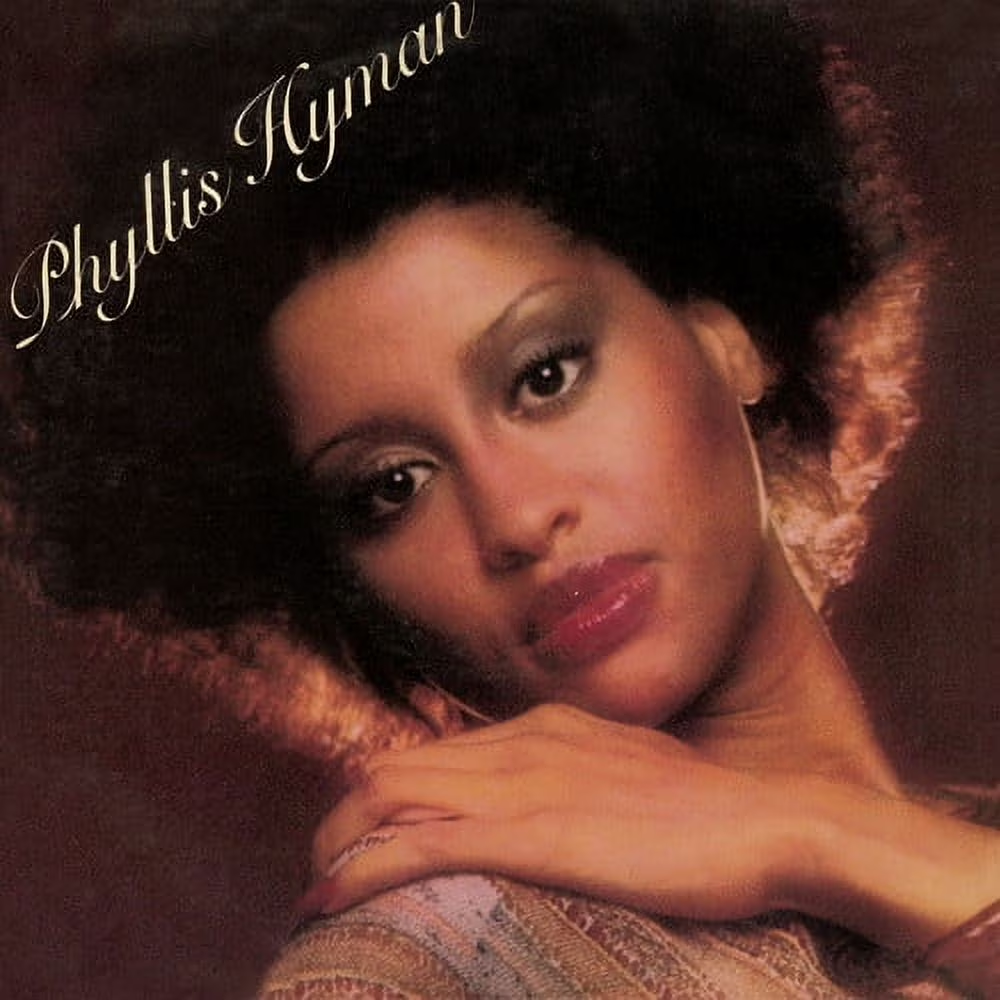
She was the sonic blueprint for the Urban Sophisticate, a woman who wore the hustle of New York like a designer coat and the loneliness of the late-shift like a badge of honor.
To feel her music was to walk through an Epic List of the city’s bones: the steam rising from a midnight manhole and the clinking ice in a lonely jazz club and the rhythm of the A-train rattling the windows and the electric, velvet heat of a summer night in Harlem.
She stood as a Sovereign Paradox, a term—the Dialectic of the Asphalt and the Awe—that defines an artist who can command a sold-out theater while still sounding like she’s whispering a secret to a stranger in a crowded diner. Her voice was the Fuel that kept the city’s heart beating, a premium-grade mixture of street-smart grit and penthouse elegance that provided the only warmth available in a cold, steel-and-glass wilderness.
In the end, her legend lives in that shimmering reflection in a curbside puddle where the city lights blur into a million different colors, echoing the vibrato of a woman who was too big for the world but just right for the shadows.