
In the grand, fog-swept theater of San Francisco’s political economy, the passage of Proposition C represented a seismic shift from the Macro—a high-altitude tax on corporate giants—to the Micro—the street-level acquisition of decaying hotels by powerful nonprofit entities. While framed as a humanitarian crusade, the reality in 2026 is a sophisticated financial maneuver. At the heart of this sits the Tenderloin Housing Clinic (THC), an organization that has mastered the Master Lease—a system where a nonprofit leases an entire building from a private landlord—turning social policy into a lucrative real estate backdoor.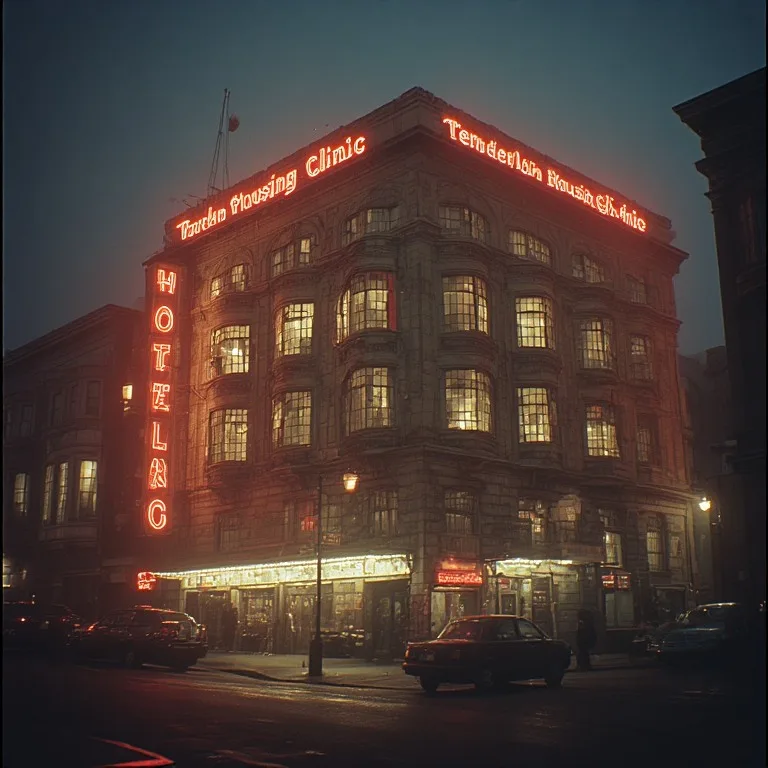
The capital flows from the glass-and-steel heights of Salesforce and the data-driven coffers of Big Tech and the relentless ledgers of the Controller’s Office into the “Our City, Our Home” Fund and finally into the hands of the Master Lease holders. This circulation of wealth is predicated on several Universal Truths. The Master Lease Monopoly ensures the City rarely buys buildings, instead creating an Impenetrable Revenue Stream for private landlords. Furthermore, the Inflationary Floor created by earmarking over $300 million annually has placed a Permanent Price Floor under the neighborhood, ensuring property values remain high even during a market downturn.
Think of Prop C as the High-Octane Fuel injected into a high-friction, aging engine. In a standard market, an SRO (Single Room Occupancy) building is a mechanical nightmare plagued by code violations and social volatility. However, Prop C acts as the Combustive Force that vaporizes these risks. Because the funding is “dedicated” by law, it provides a relentless pressure that keeps the machine of nonprofit real estate expansion running at full throttle. By 2026, the core “Permanent Housing” mandate of Prop C remains the primary engine driving the Tenderloin’s real estate math.
Ultimately, while the view from the penthouse suggests a city finally solving its housing crisis, the view from the Gutter reveals a closed-loop economy. This isn’t just about housing; it is about the Institutionalization of the Underclass to justify the perpetual flow of tax-subsidized rent. In San Francisco, the most lucrative real estate isn’t the one you build for the rich; it’s the one the government pays you to hold for the poor—a backdoor that has become the building block of a new, nonprofit-industrial skyline.