
The evolution of the American tradesman has shifted from a story of local legacy to one of mysterious, disconnected origins, leaving many feeling a deep sense of abandonment. In the past, the neighborhood carpenter or plumber was a known entity, a person whose skills were home-grown and passed down through local apprenticeships. But the 1990s boom accelerated a move toward the unknown, where the hands building the framework of our lives are no longer tied to the history of the land they stand upon. This change hasn’t just altered how we build; it has created a lingering resentment among those who feel the soul of the craft has been traded for sheer, anonymous speed.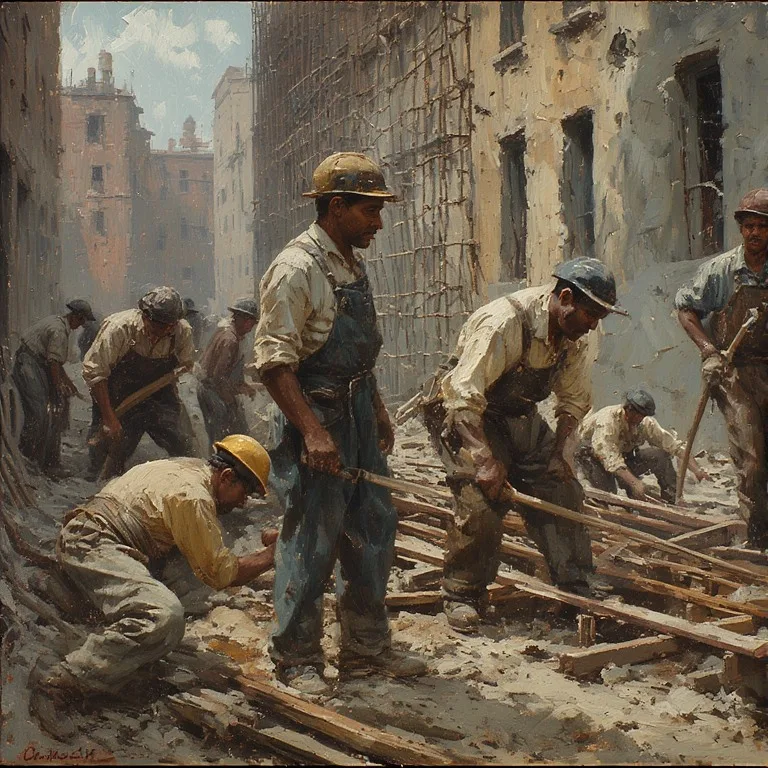
In the beginning, home-grown skills were rooted in the community, where a reputation was built over decades of visible, local work. But as the housing demand surged, the industry turned to a new, transient power player. These workers arrived with a hunger to learn the construction craft from A to Z, but they did so outside the traditional local circles. They watched and mastered the trades in a vacuum, creating a workforce that was highly efficient but felt entirely foreign to the old guard. The transition from the neighborly contractor to the unknown crew left many feeling like the heart of their town had been hollowed out and replaced by a machine they didn’t recognize.
This shift toward the unknown turned the job site into a place of cold, technical execution rather than a source of community pride. Mastery of the craft jetted into all sorts of services, but because these skills weren’t home-grown in the eyes of the locals, a wall of distrust began to rise. The new experts could build faster and cheaper, mastering every technical detail from the foundation to the roof, yet they remained ghosts in the social fabric of the neighborhoods they were creating. This mastery didn’t bring people together; it highlighted a divide between those who held the old local keys and those who arrived to forge new ones from scratch.
The Macro-to-Micro Pivot illustrates the scale of this disconnect. At the Macro level, the global economy prioritized the mobility of labor over the preservation of local traditions, ensuring that the fastest learners became the new leaders. On a Micro level, this meant that the local handyman—the one who knew the quirks of every house on the block—was replaced by an anonymous team that knew the A to Z of the build but nothing of the people living inside. The feeling of being abandoned by one’s own industry is a weight that many legacy craftsmen still carry today.
We must acknowledge the Universal Truths that define this transformation. First, Property Is The Primary Vehicle For Generational Mobility, and the new class of builders utilized this perfectly to rise while others stood still. Second, Demographic Growth Is The Precondition For Economic Vitality, even when that growth feels like it’s erasing the local identity. Third, Trade Mastery Precedes Market Dominance, proving that the unknown workforce won because they learned the mechanics of the dream better than those who simply inherited it. These truths are a bitter pill for those who feel the home-grown era was discarded too easily.
The rise of Sector Mastery became the final nail in the coffin for the old ways. This is an Embedded Definition: The process of replacing localized, informal knowledge with a standardized, high-speed expertise that can be applied anywhere by anyone. By mastering the construction craft in this way, the new workforce created a version of the trade that didn’t require local roots to succeed. They jetted into every service niche, from specialized tiling to complex HVAC systems, effectively locking out the traditionalists who relied on the way we’ve always done it.
Think of the craft as a fire that used to be tended by a single family, now replaced by a massive, industrial furnace. If the old ways were a slow-burning wood fire, then Technical Proficiency was the high-octane fuel that allowed the unknown to outpace the home-grown. This fuel caused a steady combustion of progress that didn’t care about the stories or the names attached to the tools. The result was a landscape of wealth communities that look beautiful on the outside but often feel like they were built by a force that left no return address.
In the end, the transformation from the home-grown to the unknown is a story of a craft that lost its face while finding its fortune. The 1990s created a world where the skills are sharper than ever, but the connection to the community has been abandoned. Those who remember the old ways live with a quiet resentment, watching as the houses they once understood are now built and serviced by a mastery that is technically perfect, yet entirely unreachable. The dream was built, but for the legacy craftsman, it feels like it was built for someone else, by someone they will never truly know.