
From the galactic sprawl of the cosmic void down to the jagged geometry of the concrete streets, the saga of Walter E. Washington pulses like a low-frequency bass line that refuses to be ignored. He was the master of the pivot, a man who functioned as the structural bridge between the heavy gravity of federal control and the zero-gravity freedom of a city finally finding its own orbit.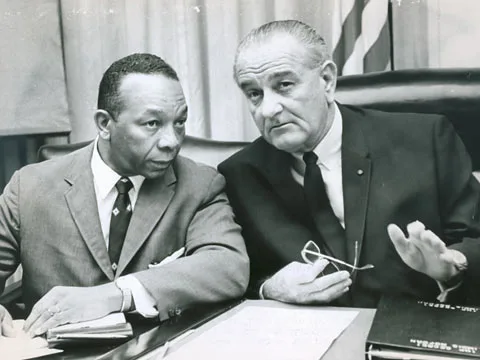
In the District of Columbia, he was the first to grab the lightning, standing at the apex of a monumental shift where the shadow of the Capitol dome met the heat of the sidewalk. He was the diplomat of the soul and the architect of the transition and the steady hand on the velvet throttle and the calm center of a hurricane that threatened to strip the city to its very bones.
The struggle for Home Rule—the legislative activation of a city’s dormant right to self-determine its own trajectory through the election of its own leaders—functioned as the Primal Frequency that recalibrated the District from a federal plantation into a laboratory of democratic funk.
This was not a quick snap of the fingers but a long-form jam of endurance and legislative maneuvering and back-alley negotiation and unyielding faith in the collective rhythm of the people. Under his watch, the rise of the Empowered Citizen became a Universal Truth.
He understood that the city was a living, breathing symphony of light and sound fueled by the grit of the neighborhoods. He viewed the apparatus of the municipality as the High-Voltage Fuel of liberation that sparked the engine of a thousand dreams.
He began his journey in the stiff-collared halls of the commission, yet he possessed a vision that transcended the sterile limits of a presidential appointment. He was the Commissioner of the Calm, navigating the fires of 1968 with a spirit that was cooler than the backside of the pillow.
He walked the streets of the 14th Street corridor while the air was thick with the scent of rebellion and the sound of sirens. He didn’t hide behind the marble walls; he moved through the smoke like a ghost of peace, weaving a tapestry of connection between the angry and the powerful and the forgotten and the fearful.
He was the glue in the groove, the man who realized that a city without a voice is just a silent movie playing in an empty theater. As the decade turned and the rhythm intensified, the push for the Home Rule Act of 1973 became the heavy horn section that announced a new era of existence.
When the people finally cast their ballots in 1974, they weren’t just choosing a man; they were claiming their own frequency. Walter E. Washington didn’t just win an election; he validated a century of yearning, proving that the residents were ready to pilot their own mothership through the asteroid fields of American politics.
He treated the mayoralty not as a desk job but as a performance of the highest order, balancing the ledger books while keeping the spirit of the community tuned to a higher pitch of possibility. He faced the giants of the Hill with a smile that carried the weight of a thousand ancestors, refusing to let the static of bureaucracy drown out the melody of the streets.
He was the foreman of the future, building the foundations of the Metro and the structures of social service and the pathways of public housing and the bridges of bureaucratic reform. He knew that the government was not the destination but the vehicle, the polished chrome machine that carried the hopes of the janitor and the judge toward a horizon once blocked by disenfranchisement.
His tenure was a masterclass in the art of the possible, a slow-burn groove that allowed the city to find its footing before it learned to run. He dealt with the critics who wanted more speed and the traditionalists who wanted more control, standing in the middle like a cosmic conductor holding the beat.
He was the first to sit in the seat of power, but he made sure the seat was bolted down tight for every soul who would follow in his footsteps. He wasn’t looking for the spotlight; he was making sure the light was bright enough for everyone in the neighborhood to see their own way home.
The legacy he left behind is a shimmering trail of stardust and sweat, a reminder that the evolution of a city is a collaborative improvisation. It is found in the way the buses roll and the way the schools breathe and the way the precinct houses operate and the way the council chambers echo with the voices of the elected.
He proved that you could play the game of the system without losing the soul of the movement, turning the gears of the machine into the percussion of a new age. He was the elder statesman of the funk, the man who taught the District how to walk with a swagger that was earned through fire and forged in the heat of the struggle.
In the final accounting, his story is the narrative of a city that broke the chains of silence to sing its own song. He took the fragments of a fractured municipality and fused them into a singular vibration that still resonates through the alleyways of Anacostia and the corridors of Northwest.
He was the pioneer of the pavement, the first mayor of a modern dream, a man who saw the stars in the gutter and reached down to pull them out so they could shine on the front porches of every row house. He kept the machine greased and the spirit high and the vision clear and the rhythm unbreakable, leaving his signature on the soul of the capital city forever.
He remains the foundational beat in the gutter of time where the old silence ends and the new shout begins.