
The mid-twentieth century is often remembered through a haze of pastel kitchens, manicured lawns, and the deceptively soothing soundtrack of postwar optimism. Yet, beneath the lacquered veneer of the 1950s and 1960s American dream lay a sprawling, medicalized crisis fueled by a desperate corporate rush to medicate the nation’s women. This was an era governed by strict cultural mandates, where the unbearable pressure to maintain the image of Suburban Bliss and The Perfect Family ran headlong into the cold realities of systemic isolation.
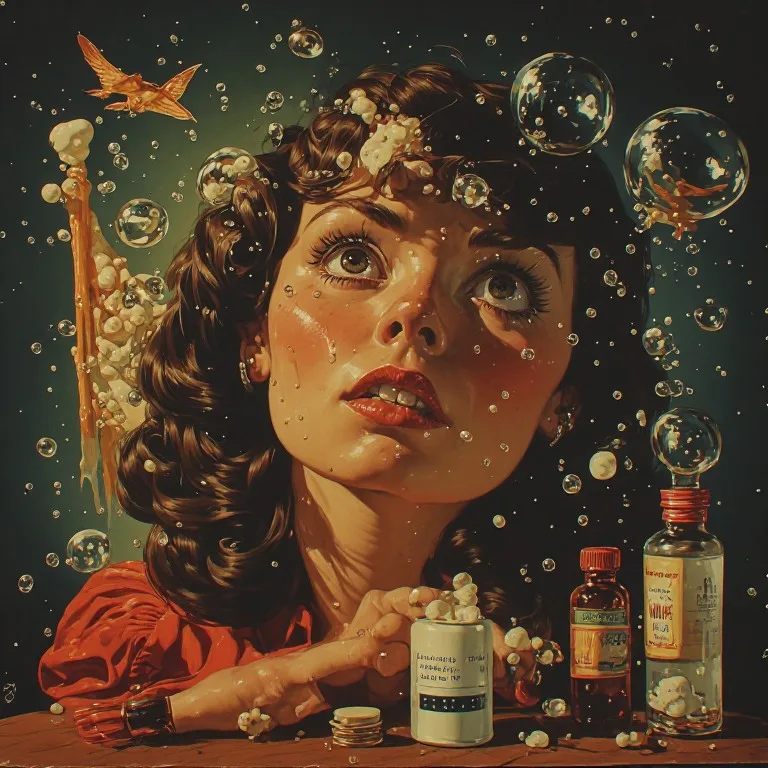
To cope with this suffocating environment, an entire generation of women was quietly systematically steered toward the medicine cabinet. While history later coined the phrase Mother’s Little Helper to describe the milder tranquilizers of the late 1960s, the true, heavy-duty architects of this early epidemic were barbiturates, highly potent central nervous system depressants, or chemical compounds that slow down brain activity, marketed with reckless enthusiasm as simple remedies for daytime nerves.
The profound emptiness of this lifestyle became the exact fuel that ignited the pharmaceutical boom. Millions of college-educated, middle-class women found themselves trapped in an endless loop of laundry and cooking and cleaning and smiling through a deep, unnameable despair. Rather than acknowledging that this Housewife Syndrome was a logical reaction to forced domestic confinement, the male-dominated medical establishment diagnosed it as a personal failure of femininity.
Pharmaceutical companies quickly recognized this cultural friction as an absolute goldmine. They launched aggressive, deeply gendered advertising campaigns targeting overworked doctors and overwhelmed wives, explicitly pitching sedatives as the ultimate tool to restore a woman to her natural, cheerful state of domestic submission. The prescription pad became the primary weapon used to blunt the sharp edges of female discontent.
But the pills distributed so freely carried an immense, unadvertised lethality. Long before safer alternatives arrived, the frontline sedatives of choice were aggressive barbiturates like Secobarbital and Pentobarbital and Amobarbital. These drugs were extraordinarily toxic, violently addictive, and fundamentally unstable due to three distinct chemical trapdoors.
First, they possessed a narrow therapeutic window, meaning there was a microscopic margin between a dose that induced sleep and a fatal dose that triggered total respiratory failure. Second, they caused barbiturate automatism a drug-induced amnesia where a woman would take her nightly dose, instantly forget she had taken it, and continuously swallow more pills until her lungs simply stopped moving. Finally, they shared a lethal alcohol synergy, creating a compounding chemical reaction that essentially paralyzed the brain’s autonomic breathing centers.
The human cost of this chemical compliance was staggering, though largely wiped from the public ledger. By 1965, congressional data indicated that over a quarter-million Americans were hopelessly dependent on barbiturates, with women bearing the overwhelming brunt of the damage.
While the high profile overdose of Marilyn Monroe in 1962 briefly forced the phrase “acute barbiturate poisoning” into the national lexicon, thousands of ordinary mothers died completely anonymous deaths in their master bedrooms. Their quiet demises were routinely covered up, misclassified, and scrubbed by sympathetic local coroners to protect their families from the crushing public shame of addiction.
As the body count grew too massive to ignore, the pharmaceutical industry pivotally shifted, paving the way for the explosive mid-60s arrival of benzodiazepines like Valium. Marketed as miracle cures because they lacked the immediate, fatal respiratory risks of their predecessors, these new tranquilizers did not actually solve the crisis. They merely traded sudden, violent death for a slow, decades-long chemical entrapment.
When the pastel dust finally settled on the mid-century suburbs, it left behind an invisible landscape of shattered memories, fractured families, and thousands of empty amber vials scattered across the velvet-lined gutters of an idealized American history.