Remember the COVID-19 mask debates? Or how about arguments over vaccine mandates? Turns out, humanity has been having these same fights for centuries! One could almost say millennia, if we consider the ancient world’s attempts to contain leprosy or other contagions through isolation and social ostracization. This isn’t a new phenomenon; it’s an enduring clash between what’s best for everyone (public health) and what individuals want for themselves (personal liberty). It’s a tension as old as society itself, a dance between the collective and the individual that shapes our laws, our ethics, and, ultimately, our very survival.
The Cholera Riots offer a particularly visceral example. Fear and fury intertwined, fueled by a potent cocktail of distrust. People were scared, distrustful of doctors (who they sometimes thought were body snatchers!), and absolutely hated being told what to do. The medical establishment, still in its relative infancy, wasn’t always the most reassuring presence either. Their methods could seem draconian, their understanding of disease rudimentary
T his led to actual riots—think burning hospitals in Staten Island or violent clashes in Liverpool and Russia—all because folks felt their freedoms were being trampled. Consider the burning of the Marine Hospital on Staten Island in 1892, sparked by fears of forced quarantine and fueled by anti-immigrant sentiment. It was a potent reminder that public health measures, however well-intentioned, can quickly become flashpoints for social unrest.

burning of the Marine Hospital on Staten Island in 1892
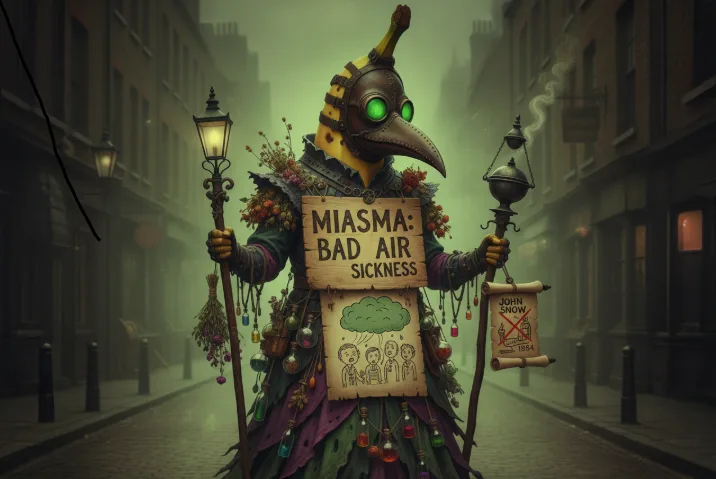
Adding fuel to the fire was the prevailing, and ultimately incorrect, belief in miasma theory – the idea that “bad air” caused illness. It wasn’t until the pioneering work of John Snow, who meticulously traced a cholera outbreak in London to a contaminated water pump, that the germ theory began to gain traction. But even with scientific evidence mounting, changing deeply ingrained beliefs and practices took time. This lag between scientific understanding and public acceptance continues to plague us today.
misma datahowillie
Fast forward to another pandemic, the 1918 Flu, and guess what? Masks became the new battleground. San Francisco led the charge with mandatory mask-wearing, initially framed as a patriotic duty during WWI. Posters urged citizens to “Wear a Mask and Save Your Country,” appealing to a sense of collective responsibility during a time of national crisis. “The Masked City” became a symbol of civic duty, at least for a while.
But discomfort, skepticism, and a strong sense of personal liberty led to organized resistance, like San Francisco’s “Anti-Mask League” holding rallies and petitioning against mandates. Prominent citizens, including doctors and lawyers, joined the ranks of the anti-maskers, arguing that the mandates were an infringement on their personal freedoms and that the masks themselves were ineffective. Fines, arrests, and even debates among officials about constitutionality—the parallels to recent times are uncanny. One wonders if history truly repeats itself, or if we simply fail to learn its lessons.