
The global apparatus of human industry is shifting its weight from the deep, dark carbon deposits of the Carboniferous era to the crystalline lattices of the silicon age.
For two centuries, the primary kinetic driver of civilization was the extraction of ancient sunlight trapped in fossil fuels. This was a process of combustion where coal, oil, and gas were pulled from the earth to be burned, vanishing into the atmosphere as energy and exhaust. This was the era of volume and thermal power.
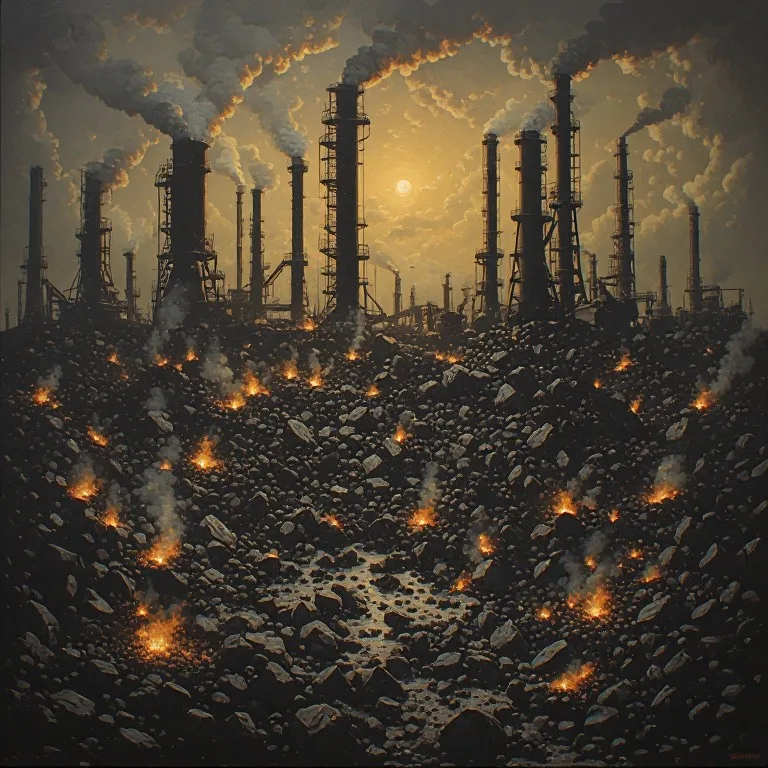
Today, the geopolitical and technological architecture of the world is pivoting toward an entirely different geological layer. We are moving from the burning of hydrocarbons to the manipulation of the periodic table, where the fundamental currency of progress is no longer the raw heat of a fossil fuel but the precise electrical conductivity of a silica wafer.
The transition is a journey from the crude energy of the furnace to the subtle architecture of the semiconductor, and this shift has fundamentally re-engineered the map of global resource extraction.
In the old paradigm, nations fought for control over oil basins and coal seams, treating the earth as a gas station to power massive mechanical engines.
In the new paradigm, the global economy relies on an epic list of elemental building blocks, and countries scramble for lithium, and cobalt, and nickel, and copper, and gallium, and the hyper-pure silica sand scooped from the quartz veins of the Appalachian mountains.
These minerals are not fuels to be consumed; they are the permanent infrastructure of the digital age, acting as the physical vessels that catch, store, and direct the flow of electrons across the planet.
This structural evolution represents the ascent of the Technical Imperative—the modern economic reality where industrial dominance is no longer determined by who possesses the most raw tonnage of fuel, but by who possesses the advanced chemical and metallurgical capacity to refine raw earth into atomic-level perfection..
Silica, which is highly purified silicon dioxide derived from quartz, sits at the absolute center of this transformation. Through an intense process of thermal reduction and chemical purification, ordinary sand is transformed into polysilicon of nine-nines purity, meaning it is 99.9999999% pure. This substance is the indispensable canvas upon which modern computing is etched.
The fuel of the twenty-first century is not something you burn; it is the structural integrity of the mineral itself, serving as the material foundation for every microchip, solar panel, and fiber-optic cable in existence.
While a barrel of oil is spent the moment it ignites, a gram of engineered silica or a kilogram of lithium remains trapped inside the machine, processing data and holding electrical charges for years.
This shifts the entire concept of mining from an ongoing quest for combustible materials to a high-stakes race for the specialized minerals required to build the initial infrastructure of the clean and digital economy.
This relentless pursuit of technological precision inevitably collides with the messy, earth-scarring realities of traditional extraction, plunging the idealistic promises of the digital frontier straight into the gutter of geopolitical exploitation and environmental degradation.
The clean lines of a silicon wafer or the smooth casing of an electric vehicle battery begin their lives in the heavy dust of open-pit mines in South America, the dangerous artisan shafts of Central Africa, and the chemical-laden refining complexes of East Asia.
The transition away from fossil fuels has not ended the resource curse; it has merely relocated it, trading the black oil spills of the twentieth century for the toxic tailings ponds and acid leaches of the twenty-first.
Humanity has traded the smokestack for the refinery, proving that no matter how advanced the machine becomes, its roots remain buried deep in the raw, contested crust of the earth.