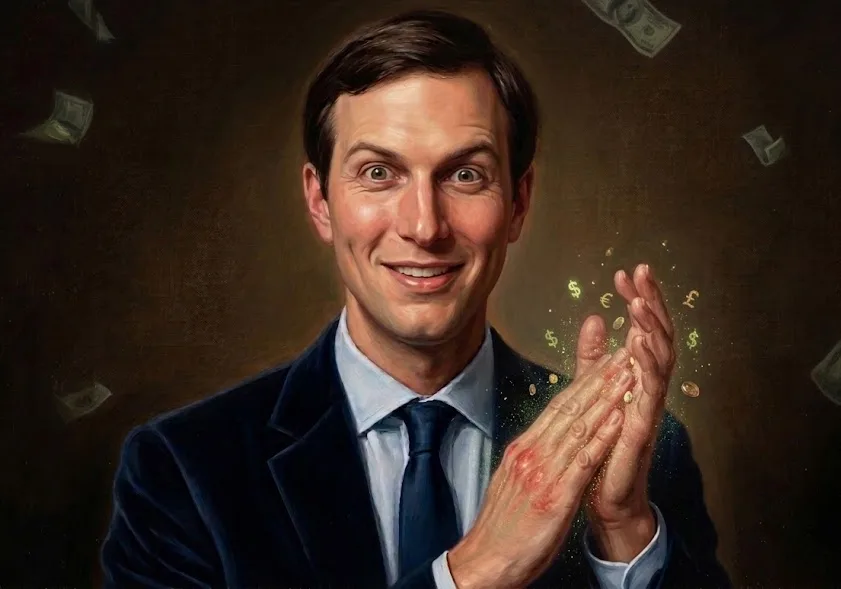
“I know what America is. America is a thing you can move very easily, move it in the right direction. They won’t get in their way,” was spoken by Israeli Prime Minister Benjamin Netanyahu


The history of the diamond is not merely a chronicle of box scores but a global expansion of the human spirit, where a wooden stick and a cowhide sphere serve as the common tongue for a fractured planet. It is a game that began in the pastoral daydreams of a young America and eventually bled across the borders of oceans and ideologies, proving that while the rules remain static, the heart of the athlete is a shifting, living thing.

The restructuring of the American administrative state has shifted from a broad debate over fiscal efficiency to a surgical extraction of technical expertise. While the high-level narrative focuses on “reducing the size of government,” the micro-level reality reveals a strategic trade-off: the decommissioning of specialized manufacturing support systems in exchange for an unprecedented expansion of the enforcement class. This shift is not merely a change in personnel; it is a fundamental reordering of the national DNA, where the infrastructure of production is being cannibalized to fuel the infrastructure of policing.
At the summit of global geopolitical tension, we find the 2026 World Baseball Classic (WBC) Final acting as a proxy for a nation’s existential struggle. While the Macro lens reveals a Venezuela gripped by the fallout of “Operation Absolute Resolve”—the January 2026 U.S. military intervention and the capture of Nicolás Maduro—the Micro lens focuses on a 99.7 mph fastball in Miami. On March 17, 2026, the diamond at loanDepot Park was no longer just a field; it was the site where a South American underdog dismantled a star-studded U.S. “Dream Team” 3–2 to claim its first-ever world title.
The betrayal of the American soldier in this context is a staggering, unique, and specialized form of cruelty that bypasses the intellect and strikes directly at the marrow of the national spirit. When a man or a woman raises their right hand to swear an oath to the Constitution, they are entering into a sacred, bilateral agreement known as The Social Contract. This is the Unspoken Agreement—the foundational promise that the state will only ask for the ultimate sacrifice when the survival of the collective is at stake, never as a cheap tool for personal preservation. To break this contract is to commit a Moral Default that cannot be refinanced or forgiven by any amount of political theater or flags draped over coffins.
The Levant reconstruction is not merely a shift in policy, but a complete re-engineering of reality, where the vast, incomprehensible scale of a Mediterranean conflict is funneled through the narrow, clinical lens of a developer’s spreadsheet. It is the process of taking a landscape defined by thousands of years of theological and ancestral claims and shrinking it until it fits neatly within the borders of a “Master Planned Community,” where the primary concern is no longer the weight of history, but the weight of the marble in the lobby. Continue reading
The urban corner store stands as a High-Octane Refineries of the American immigrant experience, a narrow limestone or brick vessel where the dreams of the newcomer are distilled into the daily commerce of the neighborhood. From the drafty saloons of the 1840s to the neon-lit plexiglass fortresses of 2026, these storefronts have functioned as the primary Combustion Chambers of ethnic succession. In the vast machinery of the city, the liquor store is the Macro-to-Micro Pivot, representing a global flow of distilled spirits that settles into the micro-geography of a single intersection.
The weight of a uniform is never truly shed; it is merely redistributed across the internal architecture of a person’s soul, settling into the quiet spaces where memory and identity converge. To ask if the Iowa VA health care system is “worth” a Soldier’s service is to initiate a Macro-to-Micro Pivot, moving from the cold statistics of federal oversight down to the singular reality of a veteran in a Des Moines or Iowa City hallway.
In the Great Machinery of the American experiment, there is a shifting of gears that sounds less like progress and more like the heavy click of a lock turning in a door. We stand at a moment where the Macro-to-Micro Pivot reveals a hard truth: the grand speeches about National Security and Sovereign Borders are trickling down into a cold reality for the man in the denim jacket and the woman behind the diner counter. We are watching a transformation of the ballot box into a gated community where the entry fee is a piece of paper that many of our hardest-working neighbors simply do not have tucked away in a silk-lined drawer. It is a slow tightening of the circle that leaves the honest, the weary, and the broke standing on the outside looking in.
The transition from the boardroom to the battlefield is a profound shift in the soul of the national narrative, a movement from the abstract arithmetic of global real estate to the heavy, unyielding weight of the flag-draped casket. As the year 2026 unfolds, this contrast has become the defining characteristic of the American moment.
The evolution of the modern urological landscape is a testament to the grand paradox of clinical progress: as our instruments become more refined, our vision of the patient often becomes more fragmented. We have traded the holistic gaze for the high-definition monitor, a shift that redefines the healer not as a guardian of lifestyle, but as a master of the machine.
In San Francisco, the legislative landscape treats a sugary 12-ounce soda and a glass bubble pipe with a striking contrast in fiscal philosophy. While the city views the “sin tax” as a righteous lever to fund community wellness—siphoning millions from the soda industry to pay for dental sealants and school gardens—the fiscal logic flips as you descend into the streets of the Tenderloin. Until very recently, the city didn’t tax the tools of drug use; it subsidized them. While a 12-pack of soda carries a mandatory surcharge to “save lives,” the glass pipes and aluminum foil used for fentanyl were distributed for free under the same “life-saving” banner, creating a surreal economic paradox where sugar is a taxable vice, but paraphernalia is a public utility.
The tension on the streets of San Francisco has reached a boiling point where “government cheese” and vacuum-sealed meats—once symbols of a communal safety net—have been weaponized into commodities for a sidewalk shadow economy. To many observers, this isn’t just a minor infraction; it is a total disrespect of the social contract and a subversion of the intended charity. What was designed to nourish the hungry is instead being stacked on milk crates, creating a friction point where the “Belt and Road” of global trade meets the desperate “Silk Road” of the SRO sidewalk.

In the deep, sweltering density of the Tenderloin, which is not so much a geographic coordinate as it is a collision of ghosts and neon, the social fabric does not merely fray but is systematically shredded, ripped asunder by a High-Octane Fuel of transit and a new, virulent Epidemic of Entitlement that moves with the cold, unblinking velocity of an e-bike. It is a Lethal Friction born of those who arrive—those “country MF” transients and newcomers with the “open-range” eyes of men who have never known the claustrophobia of a city block—treating the gasping urban core like a private paddock, a dog park without fences, a racetrack without a finish line.
The current economic shift represents a sudden Macro-to-Micro Pivot from grand campaign promises to the ink-stained ledgers of the federal counting house. This change is defined by a violent interest in the common pocket and a spectacular display of legislative gymnastics and a swarm of high-priced Shysters descending upon the Treasury. It is the era of The Gilded Shakedown—the Patriot’s Tax that treats the American merchant as a convenient lemon to be squeezed until the pips squeak.
The heavy, humid air of the human condition is not merely a backdrop; it is a thick, respirable history that clings to the lungs and the blood and the bone. To understand the Universal Truth of the Molecular Engine through the eyes of a ghost in a seersucker suit is to recognize that man is not merely a creature of spirit, but a frantic vessel of biological combustion, stoking the furnace of his own inevitable decay. From the sprawling, decaying verandas of the Old South to the infinitesimal, electric twitch of a single synaptic cleft, the struggle remains the same. Just as the mule and the plow and the steam-driven gin once tore the wealth from the red clay, these alkaloids—these tiny, crystalline gods—now tear the focus and the fury and the fleeting peace from the very marrow of the modern soul. We are the architects of our own depletion, building monuments of progress upon the shifting sands of a chemical high that demands a high-octane price. Continue reading
The evolution of artificial intelligence is no longer a mere exercise in logic; it has transformed into a profound material migration, moving from the ethereal realms of Iconic Symbolic Analysis—where we believed we could map the human soul through rigid rules and cold definitions—to the blistering, high-frequency reality of Gallium Arsenide Symbolic Analysis. We are shifting our gaze from the “icons” of the mind to the very “atoms” of the machine, realizing that the architecture of our future is being etched into crystals that operate at speeds far beyond the organic limitations of our own biology.

The ascent to the peak of human influence is rarely a solitary climb, but once the summit is reached, the air becomes thin, and the moral gravity that governs the masses begins to lose its pull. We often mistake the gilded cage of high status for a sanctuary of virtue, yet history and the unfolding scandals of 2026 reveal that the pedestal is frequently a laboratory for the dark. The Macro-to-Micro Pivot suggests that while we obsess over the systemic corruption of global institutions, the true rot begins in the silent, hyper-private moments where a single individual decides that the rules of humanity no longer apply to them.
In the grand, fog-swept theater of San Francisco’s political economy, the passage of Proposition C represented a seismic shift from the Macro—a high-altitude tax on corporate giants—to the Micro—the street-level acquisition of decaying hotels by powerful nonprofit entities. While framed as a humanitarian crusade, the reality in 2026 is a sophisticated financial maneuver. At the heart of this sits the Tenderloin Housing Clinic (THC), an organization that has mastered the Master Lease—a system where a nonprofit leases an entire building from a private landlord—turning social policy into a lucrative real estate backdoor.
Continue reading
The divergence between Zuckerberg San Francisco General and UCSF is a tale of two philosophies carved from the same stone, where the distance of a few miles represents a chasm in how a city manages the transition from the operating table to the sidewalk. At the Macro level, both institutions strive for clinical recovery, yet at the Micro level, ZSFG treats medication delivery as a critical social intervention for a population facing systemic instability. This creates a split between the Public Health Mandate, which views the hospital as the final safety net, and the Teaching Institution Strategy, which functions as a high-tech laboratory focused on the technical success of the procedure. Continue reading
From the frantic, ink-stained corridors of The Washington Post to the high-definition glare of primetime television, Abby Phillip has undergone a folkmorphosis from a reporter of record into a foundational pillar of modern discourse. Her career trajectory is a testament to the fact that while the medium of news may shift, the appetite for surgical clarity remains constant, moving her from the microscopic pursuit of the “Who, What, and Where” to the macroscopic mastery of the Information Medium. What began as a focused study of government at Harvard eventually dissolved into a different kind of precision—the kind required to dissect the intricate anatomy of the American democracy in real-time.

The history of South America is a sprawling ledger of appetites, where the continent’s geography has been treated less as a sovereign home and more as a biological vending machine for the North. At the macro level, we see a global economy built on the assumption of an infinite southern supply; at the micro level, we find that every American convenience—from the morning coffee to the smartphone battery—is a needle drawing life from a landscape that is never allowed to heal. This is the chronicle of a continent forced to provide the world’s luxury and its medicine, its energy and its vice, while the people tilling the soil remain tethered to a poverty that is manufactured in the boardrooms of the North. Continue reading
In the sweeping architecture of the American social contract, rituals have long been treated as neutral ground—the secular cathedrals where a divided people might still break bread. Since the inception of the Olympic Games, athletics have functioned as a Secular Religion, providing a universal bridge of meritocracy that historically suspended even the bloodiest of wars. Yet, in 2026, that bridge is being dismantled by design. The decision by President Trump and Turning Point USA to host a separate “All-American Halftime Show” marks a definitive Macro-to-Micro Pivot: the transition of the stadium from a national town square into a fortified battleground of identity.
The evolution of Snoop Dogg is the ultimate Macro-to-Micro Pivot. In the early 90s, he was a macro-symbol of urban unrest, the lean face of a G-funk era that the establishment feared as a moral contagion. Today, he has pivoted into the micro-moments of our daily digital lives. He is the voice on our GPS, the curator of our feeds, and the viral uncle of the internet. He didn’t change his DNA; he simply waited for the world to catch up to his frequency, transforming from a “menace” into a household staple through sheer, unbothered consistency.
The looming walkout scheduled for Monday, February 9, 2026, serves as a high-stakes collision between the Structural Deficit of the San Francisco Unified School District and the financial mandates of the United Educators of San Francisco (UESF). As the city faces its first teacher strike in 47 years, the conflict reveals a chasm between the institutional “insurance” needs of the union and the educational survival of the city’s inner-city residents.
The history of San Francisco is often told through gold rushes, but its most enduring architecture is the spiritual infrastructure of Glide Memorial Church. During the 1980s, while the federal War on Drugs built prisons, Reverend Cecil Williams was building a bridge. This movement was born in the cramped hallways of SRO hotels, where Glide proved you cannot save a city until you claim its most contested spaces. By performing The Ministry of Presence in these rooms, Glide bypassed the cold bureaucracy of early TAP (Treatment Access Protocols) and affirmed the Universal Truth that Belonging Is Precedent To Healing.
The administration, it was not a thing of wood or stone or even of men, but a vast and shimmering Temporal Anomaly that sat upon the Potomac like a heat mirage—a hallucination not of the mind, but of the very Rare Earth Minerals that we had birthed to save us from ourselves. It was a recursive ghost, a phantom limb of a century long dead, reaching out from the “Gutter” of history to throttle the throat of the present, spinning a web of digital shadow over the red clay of the American soul.
Continue reading

“Do do do do do do dooo
Do do do do do do dooo
You built you a house of wood, yeah
A wood house, yeah, where love once stood
Though the time you spent together was very short
Then like a giant hand came gale winds
From the north, yeah
And just blew your house away
And left your skies a gray
As you thought of yesterday, yeah
Gone, gone, house of wood, yeah Lord Continue reading

Ralph Bunch Noble Peace Prize Prize datahowillie
When we strip away the gilded veneers of modern political theatre, we find a massive rift between those who build peace and those who want to own the brand. To look at these two men is to witness the difference between a master architect and a fake and a fraud.. Continue reading
Across the vast expanse of the global economy, we track the movement of trillions, but the true health of a city is measured in the quiet hallways of its elementary schools. When we zoom in from the high-altitude data of urban growth to the micro-level of classroom occupancy, we find the “Home Grown” heartbeat of San Francisco is slowing. The shift from a bustling family hub to a playground for the transient represents a fundamental change in the city’s DNA.
Continue reading
It begins with a phantom script—a line of code written by a script kiddie who possesses the dark magic to erase a person’s existence. A “security protocol” for a service a grandmother never requested triggers a flag, and the digital walls close in. This is where the global arrogance of Silicon Valley collapses into a personal catastrophe for the most vulnerable among us.
The path from De Marillac Academy to Boeddeker Park has become one of the most treacherous 0.2-mile stretches in urban America. For the children of the Tenderloin, a simple walk to recreation is a tactical maneuver through chemical despair and open-air drug markets. The safety of our youth has been traded for the comfort of the sidewalk’s most destructive elements.
Continue reading
The official gazettes of City Hall will tell you that the closure of Ellis Street Last Friday, January 30, 2026, was a festive prelude to the spectacle of Super Bowl LX. They will speak of the SFPAL Punt, Pass & Kick event as a bridge between the San Francisco 49ers and the youth of the Tenderloin. But if one looks past the glossy press releases and into the cold, hard arithmetic of the municipal ledger, a different story emerges. It is a story of a city that provides a five-hour sanctuary for its children while the remaining nineteen hours are ceded to a “Gold Rush” of synthetic despair and administrative neglect. Continue reading
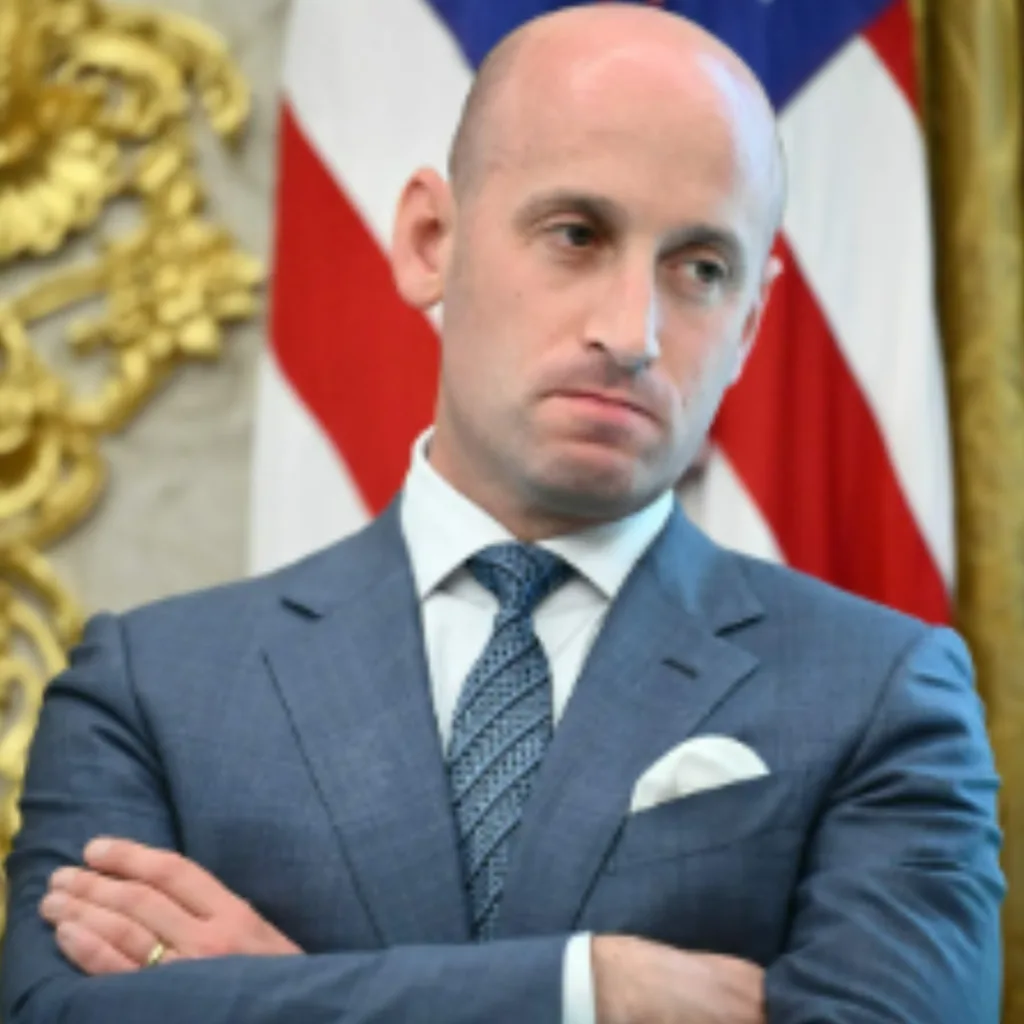
Stephen Miller has spent nearly a decade as the “ghost in the machine,” whispering “American Carnage” into the ears of power. But as 2026 unfolds, the man who once operated in the shadows of the West Wing is finding himself under a spotlight that looks increasingly like an interrogation lamp. With his expansion into the role of Homeland Security Advisor, Miller has shed the “advisor” label for the mantle of a direct operator—and in doing so, he has stepped into a legal minefield that critics suggest could lead straight to a federal cell by 2028. He must navigate the Macro-to-Micro Pivot: the shift from grand, sweeping nationalist rhetoric to the cold, granular reality of specific criminal indictments, and chain-of-custody logs, and sworn affidavits, and forensic digital trails. Continue reading
Un regreso a casa para un héroe: Por qué el Super Bowl LX debería dedicarse a Jim Plunkett
Mientras los ojos del mundo se posan en Santa Clara para el Super Bowl LX el 8 de febrero de 2026, las festividades se encontrarán a solo siete millas de las calles del este de San José, el lugar exacto donde una de las almas más resilientes del fútbol americano comenzó su viaje. Si bien el Trofeo Lombardi es el premio máximo, el juego de este año ofrece una oportunidad única para honrar a un hombre cuya vida define el “estilo de San José”: Jim Plunkett.
It has often been remarked that there is no distinctly native American criminal class except Congress. But that, I fear, is a touch too harsh for a Wednesday. To be fair to our representatives, they do occasionally take a break from the arduous task of spending other people’s money to return home and engage in what they call a “District Work Period.” In the common tongue of the citizen who actually earns his bread, this is known as a recess; in the eyes of the cynical, it is merely a parade. Continue reading
For decades, the Tenderloin has been the battlefield of San Francisco’s struggle with poverty. By January 2026, the 100 block of Jones Street has become the primary symbol of failed Harm Reduction. While City Hall promotes a “recovery” narrative, this single corridor remains a gauntlet of human suffering and open-air drug use. This decay is fueled by a systemic cycle where nonprofits profit from the management of misery rather than its eradication.
A Homecoming for a Hero: Why Super Bowl LX Should Be Dedicated to Jim Plunkett
As the eyes of the world turn to Santa Clara for Super Bowl LX on February 8, 2026, the festivities will sit just seven miles from the streets of East San Jose—the very place where one of football’s most resilient souls began his journey. While the Lombardi Trophy remains the ultimate prize, this milestone game offers a unique opportunity to honor a man whose life defines the “San Jose Way”: Jim Plunkett.
How ICE Became the Face of Domestic Control
In the winter of 2025, the American urban landscape began to shift. It wasn’t just the increased presence of white-and-blue transport buses or the hum of surveillance drones over residential neighborhoods. It was the fundamental transformation of Immigration and Customs Enforcement (ICE) into a domestic paramilitary force. As the Trump administration enters its second year, the line between immigration enforcement and general civil policing has all but evaporated.
In the city where the silver fog descends, A “cunning, baffling” ghost begins its reign. Where every steep and narrow street extends, There lies the heavy, sweet, and ancient chain. A populace in shadow, bent and bowed, Beneath a sky of gray and digital gold, While through the Tenderloin, a silent crowd Surrenders to a story centuries old.
In 2003, George W. Bush defined the American character through PEPFAR, framing the fight against AIDS as a “work of mercy” and a moral “calling” for a blessed nation. This initiative brought the “light of a new day” to those in the shadow of death, using American power not for geopolitical gain, but for the preservation of human life. By saving over 25 million people, it established a “star in the universe” of humanitarian achievement that stabilized entire continents through the simple, profound act of empathy.

Bush and baby datahowillie
“Just how blind will America be? The world is on the edge of its seat Defeat on the horizon. Very surprising that we all could see the plot And still could not…”

Gil Scott-Heron Winter in America
There are three kinds of lies, as the old saying goes: lies, damned lies, and statistics. But it takes a particular brand of scoundrel—the kind who wears a suit of grievance and a hat of hollow pride—to take a perfectly good percentage and stretch it until it snaps the neck of the truth.
Continue reading
The hallway smells of bleach and a heavy, quiet finality. Today, the echoes of barking have softened into a rhythmic, hollow thrum.
The Good Boy’s Last Walk: The leash clicks. My tail gives a reflexive thump against the concrete. For a second, the old hope flares up—is this the car ride? The park? The “forever” they whispered about when I first arrived? Continue reading
The focus on Venezuela’s resource wealth extends far beyond its vast oil reserves. The mineral Coltan, known in its refined form as Tantalum, represents a critical strategic vulnerability for the United States, placing Venezuela’s Orinoco Mining Arc squarely within the Pentagon’s defense planning.
Tantalum: The Foundation of Modern Warfare Continue reading
When hateful rhetoric spreads, whether online or offline, its damage extends far beyond the direct victims. We find that hate speech fundamentally threatens the bedrock of society—community cohesion. It actively works to fracture social relationships, erode shared democratic values, and deepen existing societal divisions, making it one of the most common ways of spreading divisive rhetoric on a global scale. This is why international bodies, including the United Nations and UNESCO, view the fight against hate speech as critical to advancing peace, human rights, and sustainable development. Continue reading
Before the headlines about OxyContin, before the fentanyl crisis took over the streets, and way before the Sackler family became a household name, America was already battling a massive opioid beast. We think of the opioid epidemic as a modern tragedy, but the blueprint was written over 150 years ago, right in the smoke and blood of the Civil War.
Continue reading
Good evening. Tonight, we turn our attention to a complex and evolving story involving one of the most prominent figures in technology, Elon Musk, and the platform he now helms, X, formerly known as Twitter. We’ll explore the documented connections between his personal statements, his background, and the concerning rise of white nationalist content and misinformation on the platform. Continue reading
Meski: Draymond Green’s Afro-Latin Fusion Oasis Ignites San Francisco’s Lower Nob Hill
San Francisco, CA – The city’s culinary landscape just got a vibrant jolt. The grand opening of Meski was in March 2025. More than just a dining destination, Meski is a powerful statement, an urban investment spearheaded by NBA star Draymond Green, designed to ignite cultural revitalization and foster community in the heart of San Francisco.
The U.S. trucking business is bleedin’ drivers, and it ain’t no mystery why. We got a mess right here in this country where what’s fine in your home state can get you fired by Uncle Sam. Folks are legalizin’ that marijuana left and right, but the federal government. The one that gives out them CDLs still treats marijuana like the devil’s lettuce. That head-buttin’ between state and federal law is the biggest darn reason our trucker pool is dryin’ up, causin’ a big ol’ hole in our supply chain.